Friday, January 31, 2014

Morgan Stanley Sutainable Investing Challenge - Enter Competition, Judge, Mentor!


We have exciting news!

Now in its fourth year, we are rebranding the International Impact Investing Challenge or I3C competition as the Morgan Stanley Sustainable Investing Challenge. You can read more about the announcement via this press release.


The Morgan Stanley Sustainable Investing Challenge asks applicants to develop institutional-quality investment vehicles that aim to achieve positive environmental or social impact as well as competitive financial returns. The Challenge is an opportunity to apply core finance and investment principles to address some of the most challenging issues of our times: water, energy, food, climate change, education and healthcare.  
                                            
Teams from business schools and other graduate programs around the world are invited to submit a two-page prospectus starting on February 3, 2014 and no later than February 25, 2014.  Ten finalists will present their proposals to a panel of judges at Morgan Stanley’s New York City headquarters for the finals on April 4, 2014.  For guidelines, judging criteria and prize information, visit www.sustainableinvestingchallenge.org.

How can you get involved? 


  • First you can forward this e-mail and share this flyer PDF with other like-minded people interested in sustainable or impact investing.
  • As a graduate student, to enter the competition, read about the guidelines, eligibility criteria and judging criteria here.  
  • For those of you with financial and/or impact investing experience, to volunteer as a first-round judge,  which requires an approximate 2-hour time commitment to read through and evaluate the 2-page prospectus submissions, please sign up here. 
  • For those of you with financial, impact investing and/or sector experience (e.g., health, education, water, agriculture, etc.), you can volunteer as a mentor to help give expertise to student teams by signing up here.
More information can be found at our Sustainable Investing Challenge website, as well as via Twitter at @SI_Challenge.

Please do not hesitate to reach out if you have questions or comments about this year’s competition. You can contact: Christine Driscoll Goulay, Associate Director, INSEAD Social Entrepreneurship Initiative
christine.driscoll@insead.edu / +33 1 60 72 41 28.


INSEAD Team - Finalists at the 2013 Competition at the World Bank
Another INSEAD Finalist Team presenting at the World Bank during the 2013 competition. INSEAD was the only school to have two finalist teams representing.


Social Entrepreneurship…. without the Entrepreneurship. A Recap of the European Commission conference on Social Enterprise, Strasbourg, January 16-17, 2014

By Christine Driscoll Goulay
Associate Director, INSEAD Social Entrepreneurship Initiative

On January 16th and 17th I was fortunate enough to spend two days at the European Commission (EC) Conference– Social Entrepreneurs: Have your Say! Drawing around 2000 participants – consisting of government officials, agencies, social entrepreneurs, academics, some students, and other stakeholders – it was a great effort to take stock of progress since the set up in 2011 of the Social Business Initiative and to see how things could be improved in the years ahead. The efforts of the EC to hold such a big and important event are much appreciated. Many good things can and will come out of the discussions and networking. However, there were also some flaws in the execution meaning that it might not have been as constructive as many participants had hoped.  Drawing from my experience, and the feedback of many others with whom I spoke, I recap here some thoughts on the conference.

First and foremost, instead of being named “Social Entrepreneurs: Have your say”, a more appropriate title considering the proceedings would have been, “Social Entrepreneurs: Sit there and listen!” The debate was frustratingly thin as the two days were mostly constructed in plenary sessions and parallel workshops that allowed for very little actual exchange (at least in the workshops I attended). Whenever there was a chance for the audience to participate and ask questions, so many hands shot up that it overwhelmed the moderators. Fortunately, there was time for participants to discuss in more depth during the “Off Broadway” portions of the programme – the World CafĂ©, Open Sessions, mingling at the social entrepreneur fair, and by pasting things on bulletin boards. These were all fruitful ways to have an equal exchange and dialogue.  Many participants questioned, however, whether this was missing the point of talking to the Commissioners, and telling them what was going well and what was going poorly. Many felt that much more of this discussion should have been featured on the main stage, where, all in all, we heard more Commissioners speaking than social entrepreneurs.  I and many others hope that the feedback from those doing the work on the ground was heard.

Yet the lack of dialogue and exchange between social entrepreneurs and the government representatives, and the dominance of government representatives on the scene, were not necessarily the most troublesome parts.  The thing that worried me the most (an American working at a business school, i.e., a capitalist!) was the focus on what I would call “old school” models of the social economy – associations, cooperatives, and mutuals - models that do not scream “innovation” or “entrepreneurship”.  Not to imply that these models are not worthwhile; on the contrary, they are great and important parts of the social economy. But I would not necessarily call them the way of the future. In any case, I do not think "social entrepreneurship" as understood by the EC should be limited to these forms, but over and over again, throughout the course of the conference, we heard primarily about these models. Many government officials commented on the importance of reinvesting profits (even so far as wanting all profit to be reinvested; the more moderate view was that the majority of profit should be reinvested) and the focus on democratic governance in the form of one person, one vote.  These are nice features for non-profits, but they are not going to encourage entrepreneurship.  During the first day of the conference, commissioners exclaimed that they wanted Europe to be entrepreneurial, but if you are restricting profits and going for consensus management, you are not going to attract entrepreneurs. Nor will you attract any investment. Won’t this limit potential impact in the long run? Better just take the word “entrepreneurship” right out of the term “social entrepreneurship”. These "old school" sentiments were so pronounced and so socialist, that for this capitalist, it was hard to swallow. And it was worrisome to think that European policy might be shaped around these tenants. I believe the only examples of social enterprise shown on the main stage were of cooperatives. Where were the young social entrepreneurs starting new innovative business models? It was disappointing not to have representation from the upcoming generation of social entrepreneurs who are pushing the barriers of the field.

Another reaction I felt and heard from others was that there was a regional bias to the conference.  For example, I personally found that, more than once, the UK was criticized for trying to unduly influence other Member States or for putting forth their view that the private, public and the third sectors are converging, resulting in a blended approach to social enterprise. In the words of some, this approach was “diminishing the power of the non-profit sector”.  I was not aware that there was such reticence to accepting the UK’s approach in this field.  In my opinion, the UK has the most advanced regulatory system for social enterprise in Europe with over 8000 enterprises registered as Community Interest Companies (CICs) as well as the most developed social finance sector.  The UK landscape is most closely aligned with what is happening in the US and other areas of the world.  But why is it that not one other Member State has adopted the CIC even though it is spreading to Canada and Nova Scotia?  It makes you question whether Member States are learning from each other and sharing best practices? Equally as important, the Eastern European states were woefully under-represented in panel sessions. We saw virtually no examples of work in those areas. With a very different history in the non-profit sector than Western Europe, there could have been some interesting sharing opportunities there. This imbalance left many with the sentiment that the conference could have been better at exploring best practices and trying to spread innovation. Hopefully, this is something that will come in the wake of the event as it was an issue frequently discussed during the two days.

Lastly, there was a frustrating lack of diversity among those speaking on the main stage which dampened the inspirational impact. Efforts were made to add inspiration by side activities like making us write things on paper airplanes and throw them in the auditorium. For me, this just spreads the stereotype that social entrepreneurs are “flighty” (excuse the pun). The inspiration should have been in the content and representation of speakers on the main stage, not in diversions. 

I do not want to appear overly critical of the event (though admittedly, I probably do).  It was a valiant effort to get many stakeholders in the same room to discuss important issues around social enterprise. By holding this conference, the EC has publicly demonstrated that this subject is important to it.  A wonderful goal was achieved at the end of the conference when a 10-point declaration was given to Commissioner Michel Barnier, head of the Social Business Initiative (you can view and sign up to the declaration here) - a great synthesis of many of the items discussed over the course of the two days. Certainly, this declaration will lead to accountability for next steps to improve the European context for people working in the social enterprise space. Commissioner Barnier even went so far as to make the comment that this should be a regular event, a “Davos” of social enterprise.  That would be an exciting achievement.  If so, I hope that, during the next conference, there is more effort to bring some of the excitement, diversity and entrepreneurship back to social enterprise. 

Please comment and let us know your thoughts.

Thursday, December 19, 2013

Another Successful year of ISEP sessions!


INSEAD was lucky enough to host two great groups of individuals for the Fontainebleau (Nov 17-22, 2013) and Singapore (Dec 1-6, 2013) ISEP sessions this year.

From a variety of backgrounds including participants from social enterprises, foundations, impact investing funds and company CSR departments (to name a few), the attending individuals once again proved to be an inspirational and knowledgeable bunch.

This year's course covered subjects such as business model innovation, building effective teams, negotiations, leading change and the lifecycle of social enterprises. 

A more detailed review with commentary from participants to follow shortly. In the meantime, and for more information please see our web site and/or contact Hans Wahl, Director of the ISEP Programme.

MBA INDEVOR Trek to London - November 20th 2013


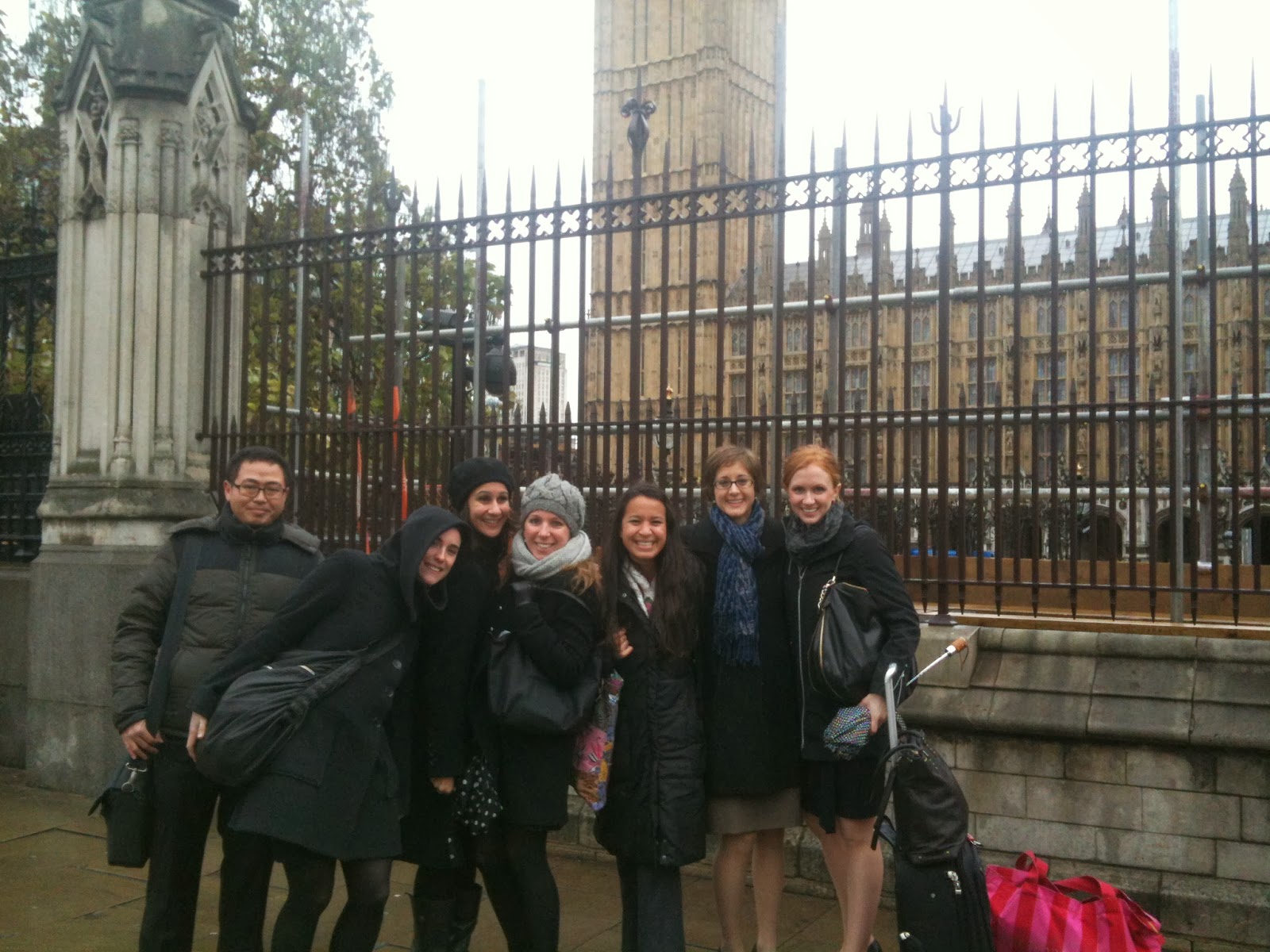
On November 20th, a group of MBA students from the INDEVOR student club for social impact and Christine Driscoll Goulay, Associate Director of INSEAD’s Social Entrepreneurship Initiative went to London for an MBA Trek to visit organisations and companies working in the social impact field.

The day started with a trip to the Open Society Foundations where there were a few INSEAD alumni present including – Mwewa Kapotwe (MBA J2013) who is now working as an Investment Analyst for the Soros Economic Development Fund and Belen Del Amo (MBA J2010) who is working as Global Director of Talent Management, Talent Acquisition and Organizational Effectiveness. The meeting was hosted by Sandra Schwarzer, former Director of the INSEAD Career Development Centre and graduate of the INSEAD EMCCC programme, and now Global Director of Human Resources at Open Society and Ida Le Duc, former INSEAD Director of Development and Corporate Partnerships and now Director of Donor Partnership at Open Society. While at the Open Society Foundations, the group learned about various areas of work of the foundation including their technology and legal programmes.

Next, the group went to Citigroup to hear about the bank’s Foundation.  With operations in different regions, Citigroup aims to tackle various global issues such as: financial capability and asset building, microfinance, enterprise development, college success, youth education and livelihoods, and neighborhood revitalization.

From there, the Trek went to have lunch with Bridges Ventures.  Mila Lukic (MBA D2012), Investment Associate and Andrew Levitt (MBA D2009), Investment Associate were on hand to help students understand the work of Bridges Ventures, a pioneering impact investing fund focused on the UK that aims to achieve dedicated social and/or environmental goals as well as aiming to achieve financial returns for investors.

The last visit of the Trek was with Social Finance, a UK organization with a mission to develop and build funding models to tackle entrenched social problems and deliver scalable and sustainable social change.  Social Finance recognizes that strong investment opportunities often require restructuring the way public money rewards social activity. They are the masterminds behind the ideas and development of the Social Impact Bond and Development Impact Bond instruments. Two alumni were also available at this meeting to speak with the students – Annika Tverin (MBA D96) and Fiona Miller Smith MBA J98).

After this last meeting, the group congregated at The Parcel Yard bar in King’s Cross Station to host a cocktail party sponsored by the INSEAD Social Impact Catalyst for the MBAs, alumni and past participants of the INSEAD Social Entrepreneurship Executive EducationProgramme (ISEP).  With over 40 people attending, it was a wonderful event full of networking and idea exchange.

The next Trek will be planned for the spring with the incoming class of December 2014. If you have ideas for places or people to visit, please e-mail Christine Driscoll Goulay.

Tuesday, December 17, 2013

New Fellowship and Competition info and deadlines!


Here is a sampling of fellowship and competition opportunities. Deadlines approaching!!

1) The 2014 Echoing Green Fellowship Application is now open!


  • To apply for any of the Echoing Green Fellowship programs, applicants should apply through our common online application which can be accessed through our website.
  • The deadline to submit an application is January 6, 2014 at 11:59 am EST.
  • Applicants should make use of all of the application guidance materials we’ve posted on our website and review our Frequently Asked Questions page to find answers to common questions.

 2)  DIV/Innovation Competition Description


Development Innovation Ventures (DIV) is an open competition supporting breakthrough solutions to the world's most intractable development challenges—interventions that could change millions of lives at a fraction of the usual cost. DIV is interested in innovations that are expected to lead to transformative (as opposed to incremental) improvements that could ultimately scale across multiple developing countries and, ideally, multiple sectors in these countries. Virtually any organization is eligible to apply with a solution for a development challenge in any sector or country in which USAID operates.
Interested applicants must submit a five-page business plan, or Letter of Interestto the DIV competition outlining their innovation and its potential to be more cost-effective, evidence-based, and scalable than traditional approaches. The DIV competition is open quarterly, with the next round closing December 16 at 11:59 EST. More information on how to apply can be found online: www.usaid.gov/div/apply.

3) The Nestlé Nespresso Global Sustainability MBA Challenge 2014. The theme of this second edition of the Challenge will be:
“Pushing the boundaries of sustainable quality coffee sourcing”
NestlĂ© Nespresso, and its long-time academic engagement partners INCAE Business School and the Sustainable Markets Intelligence Center (CIMS) were pleased with the success of the first Challenge in 2013.  32 Business Schools from 6 continents provided their best solutions to the topic of “Securing the long term sustainable future of coffee supply in Colombia.” The winning team recently returned from a successful trip to Colombia to ’ground-truth’ their proposal.
With the 2014 Challenge, we look forward to once again engaging the creativity and energy of MBA students worldwide in an exciting competition that explores issues at the cutting edge of sustainability in coffee business.  
The first step is to register your school (deadline: January 31, 2014). The second step is to register your school´s team -- only 1 team per school can participate (deadline: February 14, 2014).
Visit the Challenge website for more information and to register: www.sustainabilitymbachallenge.com
For more information contact: contact@sustainabilitymbachallenge.com